Nestled within the Palais du Luxembourg, the Bibliothèque du Sénat stands as one of the most historically and symbolically resonant spaces within the French Senate. Conceived between 1836 and 1840 under the architectural direction of Alphonse de Gisors, its grand reading room is adorned with ten monumental allegorical canvases – masterworks commissioned from two of the most distinguished painters of their generation: Léon Riesener and Camille Roqueplan.
Nearly two centuries after their installation, these ten canvases were deinstalled to undergo a comprehensive conservation and restoration campaign, as part of a broader programme devoted to the enhancement of the Senate’s movable heritage. The temporary removal of the works permitted an unprecedented technical assessment, an essential step prior to any conservation intervention.
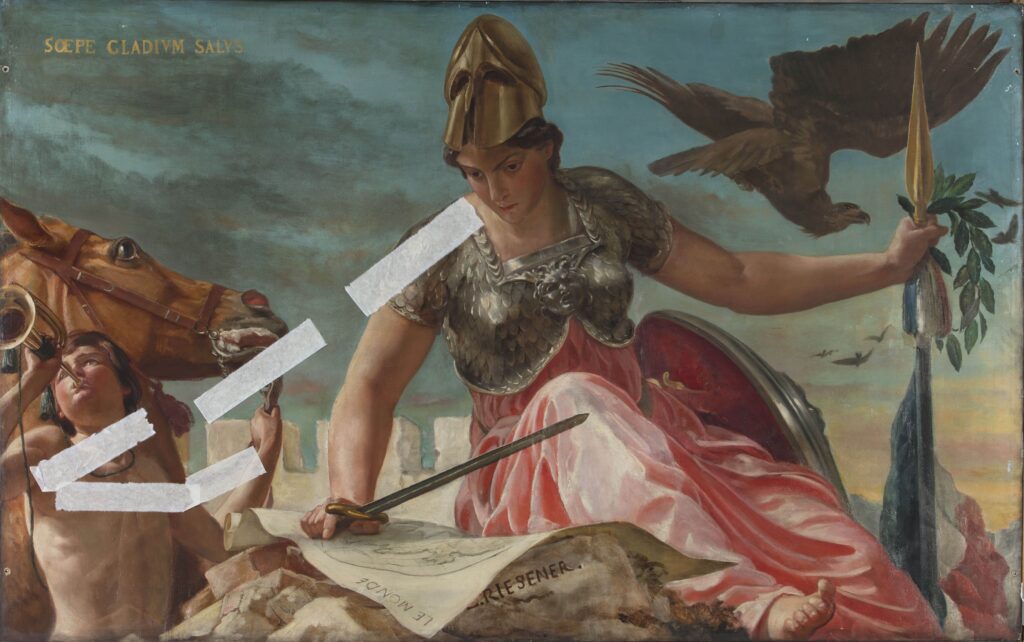
The project’s initial phase centred on diagnostic imaging and material analysis: ultraviolet fluorescence, raking light examination, false-colour infrared photography, cleaning trials, varnish reduction tests, and overpaint evaluations. Among these methodologies, infrared reflectography, conducted with the Apollo camera, proved to be of singular importance.
Applied systematically to all ten paintings, infrared reflectography unveiled extensive and varied underdrawings, offering direct insight into the creative processes of both painters. The reflectograms clearly revealed the distinct graphic approaches adopted by Riesener and Roqueplan – each marked by its own rhythm, structure, and degree of precision- highlighting the individuality of their respective techniques beneath the surface paint layers.
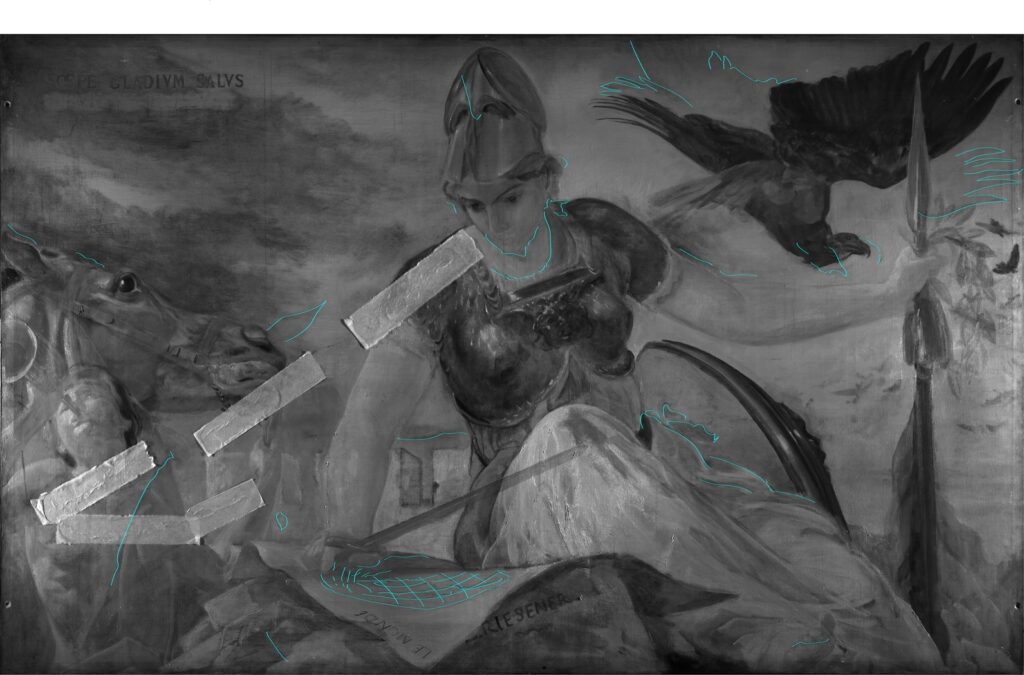
In several instances, the infrared imaging exposed noteworthy compositional changes, or pentimenti, made during the painting process. These modifications testify to the artists’ evolving intentions, offering a privileged view into the progression from conception to completion.
Beyond the insights into the artists’ creative processes, the infrared imagery also reveals the true extent of deterioration affecting several of the paintings – an aspect that had remained largely imperceptible under visible light. In certain compositions, areas that appeared stable to the naked eye were shown to be compromised by extensive losses, weakened preparatory layers, or degraded binding media.
This diagnostic clarity proved instrumental in calibrating the restoration protocols, allowing for more precise and targeted interventions, guiding decisions on varnish thinning, the selective removal of historic overpaint, and the interpretation of original pictorial strata, underscoring once again the essential role of infrared reflectography in the stewardship of cultural heritage.